Wednesday, October 17, 2012

Muzzling the Dragon

Let's call this a small victory, or maybe just a few days of a better mood. I feel as though my crazy, trying semester  has received an upgrade of sorts. All of the obstacles and challenges are still there, but perhaps the terrain has been smoothed over.

In the past week, I've gone from whelmed and panicky to... questioning and confused. I suppose this isn't an ideal state to live in, especially considering the security I felt back in the days of Arbitribe, but that's neither here nor there. Either way, it's an improvement from two weeks ago. It feels temporary and shaky, like it could give away under my feet any second. But it's a good step. A cautious step.

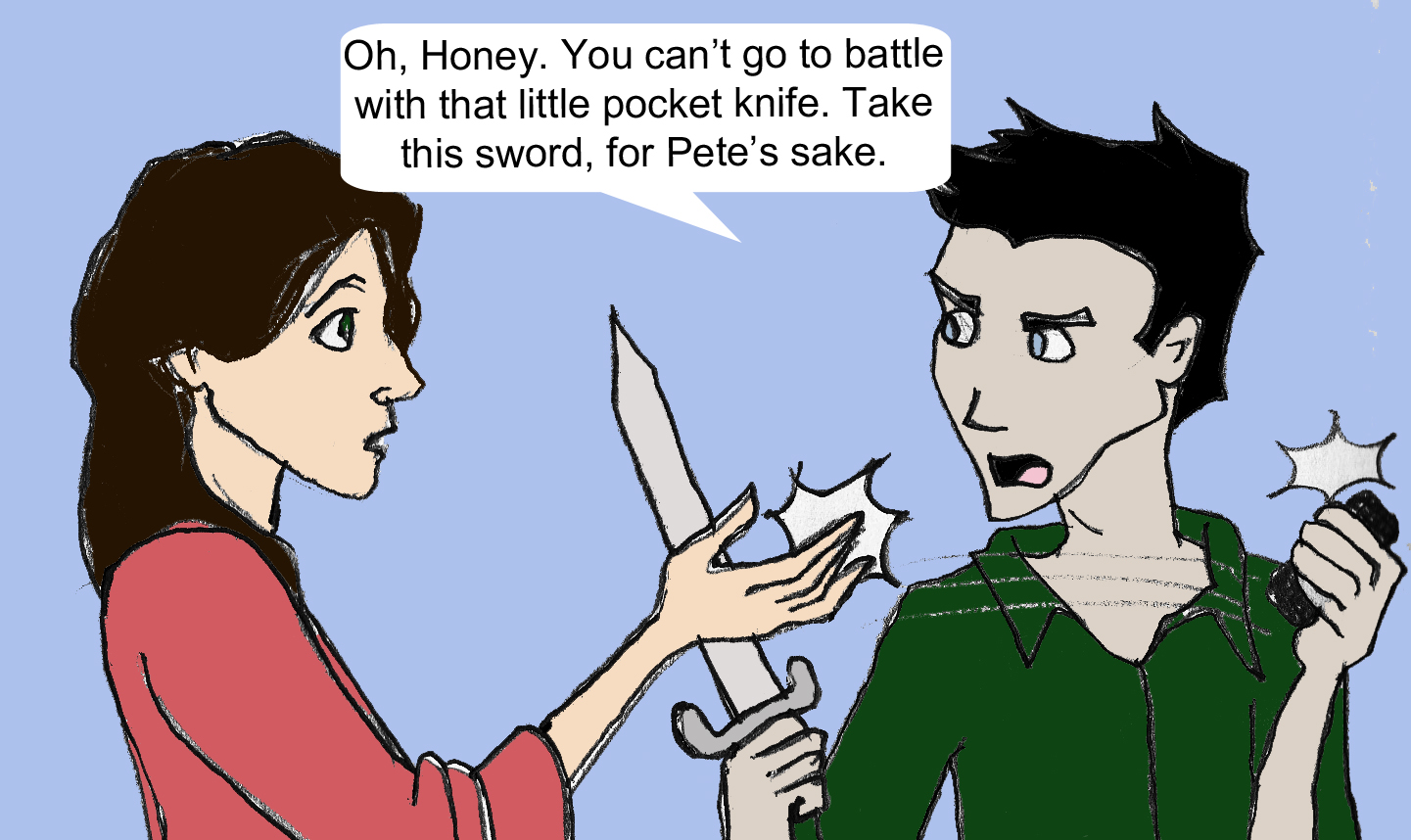
Like I said, the tribulations are still there. Technically, nothing has changed in the picture of my existence other than that I finally handed in my first ever Graduate School Paper (Hurdle One: Cleared!) and just today, gave my first oral presentation in class. I've still got five more papers and a final exam to go this semester, but now, for some very strange, unreal, perhaps even nonexistent reason, I feel less afraid of them. It's like fighting your way through a forest and getting a sudden improvement in weaponry.


I'm reminded again of the Arbitribe post I wrote (Oh my G-d) a year and a half ago. In that post, I compared facing the big, scary future (affectionately named the BSF) to fighting off a two-headed dragon built of what are you going to do with your life and who will be there with you while you do it? I talked about the salivating, ring-accessorized Love dragon and the sharp-beaked, baggy-eyed Career dragon.


(Wow. Let me just say, rereading that post now is SO WEIRD. I feel like a different person wrote it. So much has changed since then. It gives me chills to think about everything that's happened since then, and how much some of those issues have changed, while other points remain as relevant as they ever were.) I wrote later about how my faith in my beliefs and my people were providing me with some support in the battle.


I feel like I've been set upon by this nasty, reptilian beast again. This time, in a new arena: a bigger, scarier world I don't recognize, which I guess should be more frightening. But it's not.

And I really don't know why, because the monster isn't any less aggressive or smelly or difficult than it was in 2011. If anything, it's come closer and gotten ruder. But for the next few months at least, I've got the career head muzzled with a job and graduate school, so that's good.


But when it comes to actually tackling the thing, my mind is just too filled up with questions about this weird, scary, illogical terrain (see Peers on Piers). I feel like I'm telling the dragon, "I know you're there, I acknowledge that you're not going away. But right this second, you've got to wait, you stupid, drooling monster."

I feel like there's some vital piece of information I've been missing, which so many other knights already know. I know I need to fight you, monster, but until I figure this out, you've got to be muzzled.

I've got questions that need answering. That's really the only way I can put it. The world I've been thrown into now is so wild, and not what I thought it was. (This world is so weird. People are weird. Does anyone else feel that way?) I know (more or less) what I want to achieve sometime in that Big Scary Future. But... right now? (Shrugs.) I feel like I need to climb a mountain and ask some wise old sage a few questions first.


I got my upgrade, I've moved on to level two of this weird game of the BSF. Now I've got to examine my new terrain, my new weapons, and figure out which ones to use. And how to use them. BSF, I know that sometimes when people get confused, they think you're not going to sneak up behind them and bite. But I haven't forgotten. Don't think for one second, dragon, that I don't know you're there waiting.


Being confused is strange and discomforting. But it's so much better than being afraid.

Monday, October 15, 2012

Peers on Piers

So many times, it seems like everyone in the world knows a big secret, and you're the last to find out. I've spoken about this before in the context of being the last to know that a certain previously-kosher product was now no longer allowed.

But sometimes this happens when the issue is a little more complicated than a flavored drink. And then, when you've finally wised up, what to do with your newfound knowledge? Do you join the ranks of those who know it for a fact, or do you keep questioning until you've convinced yourself of its truth?

Do you jump off the dock when everyone else goes swimming, even if you hate the water or don't know how to swim or have been getting over a bronchiole infection?


Pier pressure. Ha ha.

So internet, I ask you. We know some things for sure. We've known them for a long time, because someone taught them to us. How much of what we've been taught is of actual value and how much is just what we've been taught?

How much is wrong with our society, and how much is just wrong with us? And why do some of us keep asking, keep questioning, when we know there are no answers, while others are content to just forget there ever was a question?

Maybe it's that they already know the answers? And if they do, how are they going to respond to our newfound realization, especially if we're taking a long time to figure out what to do with this information?


...or...


Neither one of these are bad responses, but they depend on the scenario. What fits at one time won't work at another.

It's at times like this, when I find out some things about human nature that I never realized before, that I worry I lack some kind of brain cell that most people have, right there with my inability to compartmentalize or remember certain Hebrew grammar rules. Maybe there are just some things I was never meant to understand.

Why are there priests who believe in Divine punishment but still embezzle money or molest children?

Why do people consider wearing skirts the epitome of modesty when the type they wear shows every lump and curve of their butt?

Why do people with allergies keep eating food they know will make them break out in violent hives?

Clearly these are not remotely under the same category, but they're all questions.

I'm just full of questions, aren't I? Isn't that how it goes? The moment you think you've happened upon a great epiphany, it turns out everyone knew it a year ago. And you find that all the epiphany did was open up a new can of preservative-filled questions. And maybe these suckers have no answers.


But then again, maybe they do. And maybe someone will be willing to just sit with us until we figure them out on our own.

Sunday, October 14, 2012

Megillah Project Update

I've finished my first grad school paper!

And more importantly for the purposes of this blog, I've been working full-tilt on the Kohelet papercut project I mentioned in The Megillah Project.

Like I said in that post, this might just be one of the most difficult paper cuts I've ever made. It's absolutely nowhere near finished, but I've been making a lot of headway, I think, and covering lots of ground. I can't remember the last time I worked so quickly on a project, and yet taken so long to get through it.

Recently, a new friend asked to see the project I'd been working on, and so I showed it to her, in all of its half-finished, unglued glory. Her immediate reaction was, "that's a lot of pain."

"Yeah," I agreed, "it's a pain to make this thing, but-"

"No," she corrected, "I meant, I see a lot of pain in it. You must have been screaming while you made this."

I thought about that. Maybe not screaming, but freaking out on the inside, quite possibly.


Like I've said so many times, it's been a tough couple of months. But ever since taking Neil Gaiman's advice to 'make good art' to heart, I've been pouring out my frustrations and stress into this thing. So yes, I suppose it is a product of stress. But that's the first semester of grad school for you.

My mom asked me the other day whether it's still in black and white. I answered that yeah, but now I've got some gray in there too. Been considering a little patch of yellow.


She told me, "Keep doing it. But don't make it too big, or you'll never get past it."

So far, this thing is 31/2 feet long with four layers. And I have to say, I do find that every time I finish a long session of sketching, cutting, and separating layer by layer, I always do feel a little lighter than when I started. I just have to hope that this will turn into something fulfilling to be born of my stress, not a long-term reminder of how I was feeling when I started. I think it'll be fine. That's something I'm strangely confident about. On to the next layer.

Wednesday, October 10, 2012

The Challenge

On Friday, my professor paused in his highly-spirited discussion comparing the histories of French and German Jewry (let's get the inevitable stereotyping joke out of the way now):


... and gave a moment's hesitation. He told us:

"All of you are going into a career in Judaic Studies, so you are going to face a very distinct challenge throughout your careers, maybe your lives. Anyone who has worked in the Jewish community is faced with the challenge of having to explain to others, usually their target audience, why they should care about being Jewish."

He went on to tell us about a contest held once upon a time in Russia, where contestants were invited to send in essays convincing the reader why they should care about being Jewish. Not religious, per se, but just Jewish. Why should they bother having any pride? Why be part of a community? Why live with the stigma? Why not just throw it all to the wind, cut your hair, eat some bacon, and go do whatever it is you want to do with those care-free non-Jews who seem to have it all figured out?

Because, let's face it, even today, even here, even now in our cushy, SO EASY in this time and country, being a Jew isn't easy. (What comes to my mind whenever I think of this is the old adage that nothing worth having ever comes easy, but that just might be my own pride talking here.)

And even now as I'm procrastinating writing yet another paper, as I'm working through what may be the hardest semester in my schooling career so far, there's such a sobering sense of pause I get from the knowledge that... this is what I signed up for. A lifetime of THIS question.

Not that I wasn't already facing it at regular intervals before I picked it as a career path.


Freaking verbatim...

I don't know for sure when this started, but for I'd say well over two years now I seem to possess the reputation for being the person to argue religion with. I truly don't understand why or how this happened. But for a period of a few months it seemed to me like everyone was bringing their contrarian friend to meet me. Because they wanted to argue, apparently? I never quite got it. I don't like arguing. When it comes to religion my usual stance is the same as with taste in food:


Either way, somehow these discussions led me early last year to decide that maybe this was the path I was meant to follow. Not to be a missionary or anything, honestly, I'm not that interested in Kiruv, but just to educate people about my awesome, wonderful, rich culture. To educate those who share the culture with me and either don't realize how great it is, or don't care.

Which brings us back to that ever-present question. Why should I care?


To which I have the following answer, the one I always think of but never say (I'm not sure why. Maybe because it's not a "smart" answer? Just a heartfelt one? I've found people who are arguing with you about religion rarely want you to answer from the heart. They want to hear from your head. (And again, this is about identity, not religious belief. But here we go:)


I know that's not an intelligent answer. It's not my usual, this-is-a-serious-discussion answer. But it's what comes into my head now. I feel like as the days go by I see more and more people choose the easy way out about things.

They drop out of school because it's too hard. They quit a job or a team or a relationship because it would challenge them. They run the other way at the first sign of something difficult or unexpected. Right now, I feel like that's an option I haven't got.

Right now, I'm overwhelmed with work, and dealing with so many blows to my plans, self-certainty, and ego, one right after the other, I feel like this entire semester has been me stepping into the role of Sideshow Bob stepping on rakes.


But I digress.

You can't run the other way when it comes to who you are, especially the parts of you that you'd probably prefer to escape. Luckily for me, I have no desire to escape Judaism. I'm proud of who I am. And when I consider how I feel about the parts of myself I'm not so proud of, it makes me feel just awful for those who are ashamed of their background.

I'm so lucky the parts of me I'm not proud of are little things like past mistakes and girly self-esteem issues. I'm so lucky I'm proud of where I come from. I'm so lucky I know who I am.

I know enough to be secure enough to take on this lifelong challenge. I'm sure enough to be able to face the barrage of why should I care, even if I can't answer it to everyone's (or anyone's) satisfaction. And I can't expect to. People a lot smarter than me have tried and failed. (No one won that Russian essay contest, by the way, because no one came up with an answer that appeased all the judges.)

Why should you care? Maybe you don't. No one can tell you why you should care. They can only tell you why they care, and hope maybe you'll relate.

But maybe you find some pride in it. Maybe you find some meaning, or something, if you're lucky, you  enjoy it. Heck, maybe the people you love find meaning in it, and maybe that's enough for you.

But even if it isn't, even if you don't want any part of it, remember. It's the identity of those who made you. It's a part of you even if you hate it. Maybe the key is, like our fears and uncertainties, to embrace it. I have no real answer. This entire post is a ramble. But man, does it feel good to ramble when it's about something I'm passionate about.

Thursday, October 4, 2012

The Megillah Project

I've been getting a few questions from people regarding the art project I mentioned in my last two posts, and elsewhere. I figure since I picked up my wonderful, shiny, new art supplies yesterday and banged out an outline for the paper I WILL have written by next week, hey. My blog is as good a medium as any to explain this thing.

The Megillah Project:

For years I've been intending to create some kind of big, huge project series revolving around all five Megillot (Kohelet, Esther, Shir HaShirim, Ruth, and Eicha). I've always been drawn to these books as an area of study and artistic inspiration, and I'm determined to create a grand artistic work for each, something that will be deeply personal, but also include every word of the actual text.

Every word. Even twelve-chapter Kohelet. Apparently I'm a glutton for punishment.

Until recently, I was at a loss of what this project should look like, what form it should take (illustrated book? giant painting?), and in what order I should take them on (shortest to longest? favorite to least favored?).

I tried several times. I still have the first pages I prepared over three years ago for what was to be an illustrated Book of Ruth.


Over time and several attempts, I stopped trying. I stopped talking about this project for a long while. And then, this past summer, inspiration numero uno struck.

I would try again, and this time, I'd emphasize the personal. Who needs another illustrated text? There's got to be a million of those, and among all that, mine would be nothing special. So I'd go for the mood and the visuals instead of literally showing a picture version of the text.

It made sense to me that when I felt a connection to a certain Megillah, whether because of some life event or state of mind or because I happen to be learning it, that's when I'd take the Megillah on, and really record the process of my state of mind through the reading and creating of the visual Megillah.

Sometime in the last two weeks, I had my inspiration numero dos, and I started on my first, and perhaps the most visually difficult Megillah: Kohelet.

You may be wondering why. Or, if you read my last post, you may not be wondering at all.

In a nutshell, Kohelet is (so far) the only Megillah I haven't heard read in shul, although hopefully, this coming Shabbat that will change. Until recently, it was also the only one I'd never bothered to read in depth from beginning to end. But school assignments, the upcoming holiday reading, and my own state of mind led me to finally buckle down and read it. Twice.

The past month has been a rough patch for me, getting adjusted to my new grad school surroundings while also dealing with some unexpected turns life has taken. It's a scary place to be. A few times, I've caught myself thinking a little like Kohelet, wondering what the point of several events, efforts, and prayers were. It seemed a fitting place to start.

So last week, I sat down and started sketching and cutting. Last night, I finished the first layer of what's to be a four/five layer project. It doesn't look very impressive so far, but it is only about a fifteenth of the way finished. It's just one layer, my first existential question. Here it is, as of last night:


It may not look like much, but it's actually one of the most grueling cuts I've ever tackled, courtesy of that decorative border on the top and bottom. Hopefully, by the time this thing is finished, it'll be twice as long as it is now and contain several more layers, plus the full text of Kohelet hidden among the cuts.

And I've got to tell you, it says more about my questions than I can ever write. It's this thorny, sticky process of trying to make it through a challenge, freeing yourself every time your sleeve gets caught, but all the while, hoping the effort has a purpose. Maybe that's a little flowery for a blog, I don't know.

Anyway, this post is here to explain the project so far, and hopefully as it progresses I'll be updating with pictures and info along the way. An update may not happen for a while, since the only reason I even had time to type this out is because I'm in bed with a fever today. But that's life. Hopefully the fever will be gone by the time I've got to go to shul this Shabbat and finally hear this thing read aloud.

Sunday, September 30, 2012

Confrontations With Kohelet

I'd like to preface this by stating that I should be writing a twelve-page paper on Jewish superstition during the medieval period right now. But I woke up with a head-and-throat ache and until the meds kick in, that paper's going nowhere anyway.

I have a complicated relationship with Megillat Kohelet. I always have. 

Sure, it's a book of wisdom, and one from several thousand years ago, so it's bound to have a few things I disagree with. But it's also well-respected and frequently quoted by philosophers and sixties rock bands. 

Recently, alongside Ezra, Nehemiah, Rambam, The Jews of Modern France, and Maccabees I & II, I was assigned Kohelet as reading for school. Plus, hey, Sukkot is here. Look at me, I'm so timely and topical!!! So I was compelled to read it again. In detail. 

I read it, taking a break every chapter to cheer myself up with a rereading of Harry Potter. What an interesting philosophical team in my head. 


In all seriousness, though, I'm very surprised by what this rereading of Kohelet has brought out in me. 

I mean, sure, it took me triple the time it should have to make it through the first two chapters, what with all the "vanity of vanities, life is nothing but vanity and chasing after the wind" and such. But as I read, I found myself strangely invested. I used to have so many serious discussions about the nature of life and faith with people who held this book in the highest esteem. And here I had to opportunity to have the discussion with the source itself.  It was a test! How could I defend my own worldview against my own brain and this book?

I must admit here, for the sake of honesty and clarity, that when I began this reread, I had no memory of the later chapters of Kohelet. All I remembered is that he says life is pointless, there is a time for everything (turn, turn, turn), women are evil, and that you should serve G-d. 

Kohelet describes throwing himself into pleasure to find meaning, and then into work, and then into wisdom. And I started having a discussion. I found myself writing short notes to Kohelet, asking him questions. Specifically, when I was told to try to picture Kohelet in the way the Rabbis of the Talmud did: as Shlomo HaMelech, as the same guy who wrote my very favorite Megillah, Shir HaShirim. 

That pretty much did it for me. Now, I was angry. I pictured myself raging at the Wise King. 

"What happened to you? Did you forget the words you wrote? Weren't you ever happy enough to freaking WRITE Shir HaShirim??"

I asked a friend of mine, "Do you ever think Kohelet took the time to just sit down and smell a rose?" To which he smirked and replied, "I think his problem is that he smelled a few too many roses, if you know what I mean." 


This just made me angrier. But I kept reading, feeling horribly negative about the whole thing, writing my notes to the King. I even started a new art project, a massive one, one that will occupy my free moments for months to come (hopefully). 

But then a funny thing happened. I reached the part in Harry Potter with the Horcruxes, where Dumbledore explains that the wicked Voldemort's actions are driven not by hatred or even ambition nearly as much as they are by his extreme fear of death. 


In other words, Voldemort was convinced that if he didn't live forever, he might as well not have lived at all, and he was willing to do anything it took to make sure that he'd never die. And since (spoilers!) the only thing he could do to ensure immortality was to actually split his own soul by murdering others and wrapping the severed pieces of his spirit in physical objects, he made the choice to live forever by becoming the face of evil. 

I started thinking about that. Someone so scared of being forgotten they cease to care about others at all, and literally attach themselves to physical objects. Voldemort is described as having followers, but no friends. As having started out handsome and whole, but turning into some kind of creature who is more serpent than human. And I thought, Voldemort is a fool. 

Kohelet doesn't suffer fools. He describes a phase of deciding to be a fool, and finding it almost better than being wise, since wisdom brings with it the pain and sadness of experience. In other words, the more you know, the more you realize you don't know. The more you feel the desire to rage against the things that will outlive you. 


But that's the part of the process where someone like Voldemort stops searching. Kohelet would shake his head and say, "Voldy, you stopped at chapter three! There's nine more to go!" (And this is where I started to shock myself. I was starting to SEE. KOHELET'S. POINT.)

Then, for some strange reason, that metaphor with smelling the roses hit me. 

Of course, when you look at a wall of climbing flowers, you generalize them. From that distance, of course, they all look like they're one and the same (and pointless). And they've got these thorns that keep you from getting close. 

I started to get it, but I didn't feel any wiser. I felt stupider. Why am I trying to find meaning at all, I wondered, when someone so much smarter than me has concluded that everything is vanity?

And then, when I was on my lunch break at work and reading chapter nine, I turned a corner. The quote goes:

The living know that they will die, but the dead know nothing at all...they will never again have a share in their labor under the sun. Go, eat your bread with joy and drink your wine with a glad heart...let your garments always be white, and your head never lack oil. Enjoy life with a wife you love through all the days of your vanity that He has granted you under the sun, for that is your compensation in life and that is your job which you labor for under the sun. Whatever you have strength to do, do it, for there is neither doing nor reckoning nor knowledge nor wisdom in the grave where you are going. 

You can ask my coworkers. I suddenly started to smile like an idiot. 

I thought about Kohelet and Harry Potter and my own place in life. I realized, life isn't pointless, as long as you make it count. Sure, maybe no one will remember you, Voldemort, but it isn't your place to be remembered forever. You're a person. Your time here is limited, and that's why it counts

You have a job to do. You're not here to be a fool and squander your days doing stupid things you find no meaning in, fighting with people, accruing physical objects to wrap your soul around... all of this is vanity and chasing after the wind. That isn't your job.

Your job is to ensure your life has meaning. Your job is to find the things that give it meaning. Appreciate and enjoy the small things like bread and wine, but make sure your conscience is clear. But also don't forget what's important in life: to find meaning in your deeds, your work, and your relationships. 

You don't see much when you look at a wall of roses. But when you stop to look at one, and take in its scent, there's perfume, and soft petals, and beautiful color.


By being careful, you even learn to navigate around the thorns. But you also can't stand around all day with your nose in a rose. You've got some wisdom to accrue.

In the very big picture of the history of the universe, your everyday actions are nothing but vanity. But here's the point you CAN have. Live well, and live ethically and morally. You won't have regrets for being a good person (unless you're royally messed up, Voldy). 

After the fifth book, even Harry Potter starts getting less angsty and angry and starts thinking before he acts (sure, he has to suffer some horrifying losses first, but still!). After chapter eight, Kohelet starts seeing some meaning. And what did I take from this?


The same thing I talked about in my last post. Of course I won't find meaning in my life if all I'm doing is living to get by. My studies are my top priority now. They're something I need to get through, and I need to do them well. But I've also got to keep on searching for meaning beyond them. Right now, I find meaning in my art and in my friendships. So when the dry documents and horrifying accounts of genocide in my history books become too much, I've got to take a break, and work on my Kohelet art project. 

I can't throw myself into only food and drink, or only labor, or only wisdom. I've got to enjoy these things and find meaning in them. All of them. That's my job under the sun. 

Kohelet and Harry Potter told me so. 
Saturday, September 22, 2012

Make Good Art

Yesterday, I finally had a moment of sheer clarity, the first in well over a month. And it was brought on, oddly enough, by a dead laptop battery and Neil Gaiman.


I was in class on a Friday, not the usual schedule, but this is what having every Tuesday for the next month impeded by Holidays does. Schedules get mixed up, things get moved around, and before you know it, there's no routine, and the world becomes a confusing place, and if you're already in a dark place, this can drag you down. That's the place I was in when I stumbled into my Judaic Studies class on Friday morning with a mostly-empty laptop battery and enormous bags under my eyes from the night not slept. I started listening to the professor, and typing notes.

Checking Facebook, wondering what the people I knew were doing, typing notes.

Checking Gmail, answering email, wondering why I was doing this, typing notes.

And I'd get distracted by things like the social life I was missing. I tried to take the advice so many people have been giving me lately: Live in the present. Don't think about the future. Don't worry. Don't plan. Focus on you. Focus on your work.

Sounds like great advice. And I've been endeavoring to take it. Work, my grandfather used to say, is the best narcotic. And I focused on work... until I finished my homework, my eyes burning from staring at a screen, and realized I was now too exhausted to eat and talk and needed to go straight to sleep before I thought too much, so I could be awake to work more tomorrow.


And every day, I got more depressed until I figured there would be no point to life until I graduate. I tried to think only about the present, and I spent that time wallowing in the fact that the present sucks.

And then a wonderful thing happened. My laptop battery died. Right there in the middle of class. There was no outlet on my side of the room, and no more on-screen distractions. So, being a super antsy person who can't just listen without moving, I took out a sheet of paper and started doing things the way I used to. I took notes by hand. And within two minutes, I had taken out another paper, and abandoned the notes. I started doodling.

All my life I've been a doodler. I used to get in SO MUCH TROUBLE for it in school. I've had more notebooks and sketchbooks taken away from me by angry teachers than I can count. I was so reprimanded for it that when several years ago CNN released a study from some big fancy university that proved doodlers tend to take better notes and participate better than other students, but ONLY when they're allowed to doodle, I stood up, shouted "HA!!!!", and wished I was obnoxious enough to email the study to my elementary school principal.

So Friday in class, I started doodling, for the first time I think since about July.


When I got into grad school, I was warned that I wouldn't have time for art anymore. I'd have to put that aside and work. It's true. I really don't have the time for my usual big projects and bedroom floor strewn with paper scraps and glue. So I stashed away all my art supplies.

I guess I must be a little strange, because it turns out I can't function by living in the present, focusing on my work and myself right now. I'm an artist. My mind is constantly whirring, thinking, planning, making lists, coming up with projects that most likely won't happen, writing stories, and creating. If you're an art person, you know what I mean. I'm not a RIGHT NOW thinker. I'm a future thinker. True, this does mean I have a penchant for worrying, but I've found in the past month that I worry most when I'm specifically trying not to.

And really, as I doodled more intricately, I started coming up with the first art project I've thought of since July. And I sketched, and the more I sketched, the more I actually heard the professor talk. And I found I had comments to make, so I raised my hand. It was the first time I participated in that class. And I continued to sketch, and continued to participate, until by the time class ended, I had been involved in a philosophical discussion (also my first in over a month) with the professor and had a full-page sketch for a brand new piece of art.

I was blown away. I felt, for the first time since early August, like myself again. I was letting my mind wander instead of rooting it in the papers I had to write and the sources I had to research. And a comic I'd seen on Zen Pencils (which I highly recommend!) popped into my head, a quote by author Neil Gaiman in his commencement address at the University of the Arts in May:

"Sometimes life is hard. Things go wrong. In life and in love and in business and in friendship and in health and in all other ways that life can go wrong.


And when things get tough, this is what you should do: Make good art.

Husband runs off with a politician, make good art. Leg crushed and then eaten by a mutated boa constrictor: make good art. IRS on your trail, make good art. Cat exploded, make good art. Someone on the internet thinks what you're doing is stupid or evil or it's all been done before, make good art. Do what only you can do best. Make good art."

I found the comic where I'd first read this and followed its link to the speech itself. If you're an artist, or even if you aren't, I highly recommend it. Here's the link.

I'm not a fan of commencement speeches, but this was one of the most inspirational things I've ever heard. Maybe that's just because I'm an art person, but it felt very, deeply personal to me. As an artist, I can't function if I can't express myself. And when I'm feeling down or stupid or betrayed, all of those feelings are going to come out in one way or another. And they can either come in the form of tears that keep me up for hours, or they can become a cartoon, or a paper-cut, or a painting. I really think I like the latter option. If work is a narcotic, then art is a caffeinated megaphone, energizing me while I enthusiastically assault other people's senses.

A solid month of trying every piece of advice to be myself again, and it was doodling in class and a Neil Gaiman speech that finally did the trick. Right now, I'm typing this up when I should be composing my ten-page paper on Jewish superstition in the Middle Ages. But you know what?

In the two days since I started letting myself get distracted by art and let my mind wander into that toxic world of the future, I've researched and gathered all my sources for my paper on Neolog Judaism, read the whole book for my superstition paper, written the outline for that paper, emailed my professor, had a visit with some old friends, read a few chapters of a book FOR FUN (!), sang some Zemirot, studied Shir HaShirim, and planned my next paper-cut project. That is more than I've accomplished in the three weeks I've been in grad school combined, when I was focusing on my work and only my work.

And yes, the dark moments still come and go. I still sometimes feel like if I wanted to, I could curl up and cry about the things that have gone wrong in the present. But I don't really have the time. I'm too busy getting distracted by all those things I was told would keep me from my work.

I'm going to make good art.